


Description
Ubiquiti PowerBeam M5 400 (PBE-M5-400) — High-Gain 5GHz Wireless Bridge
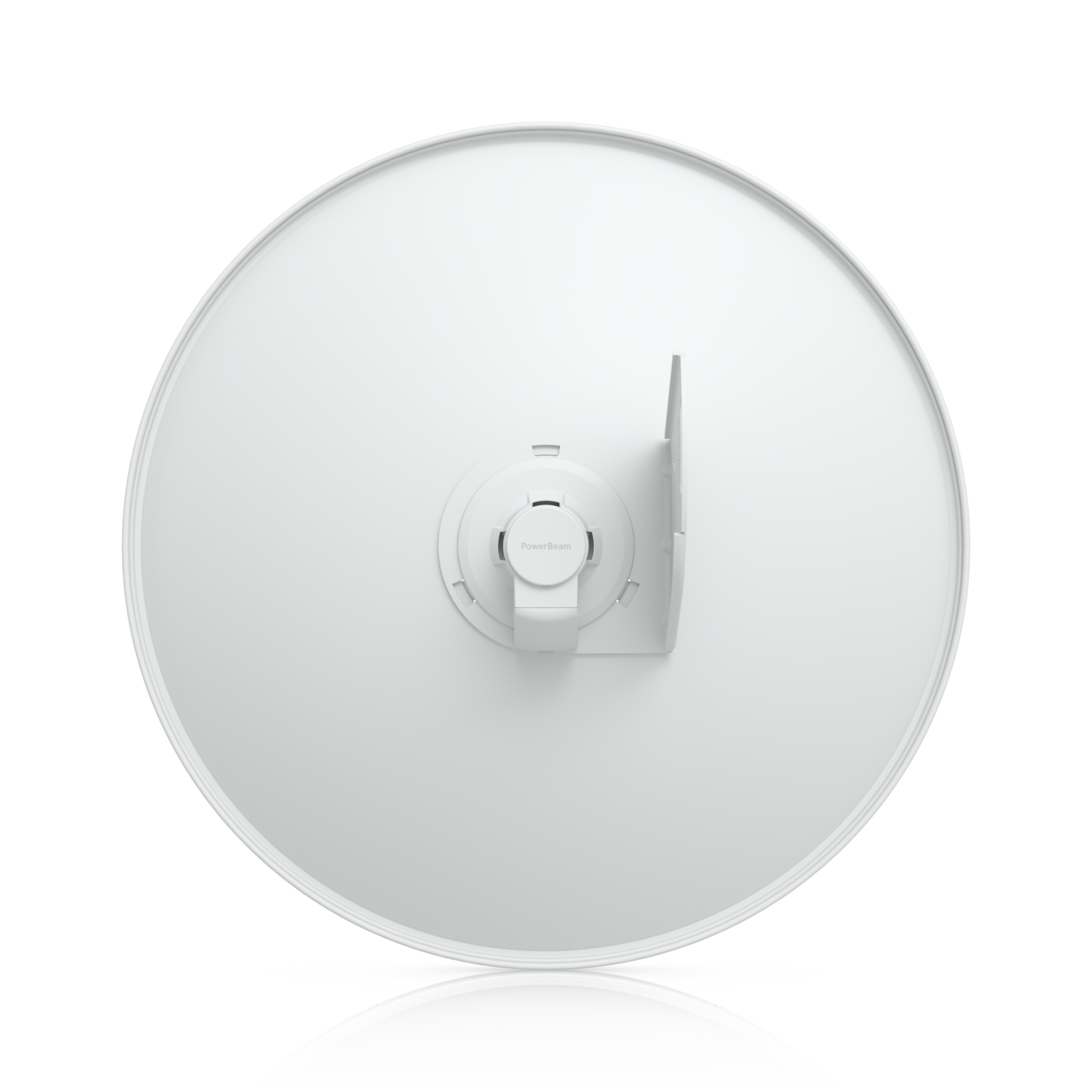
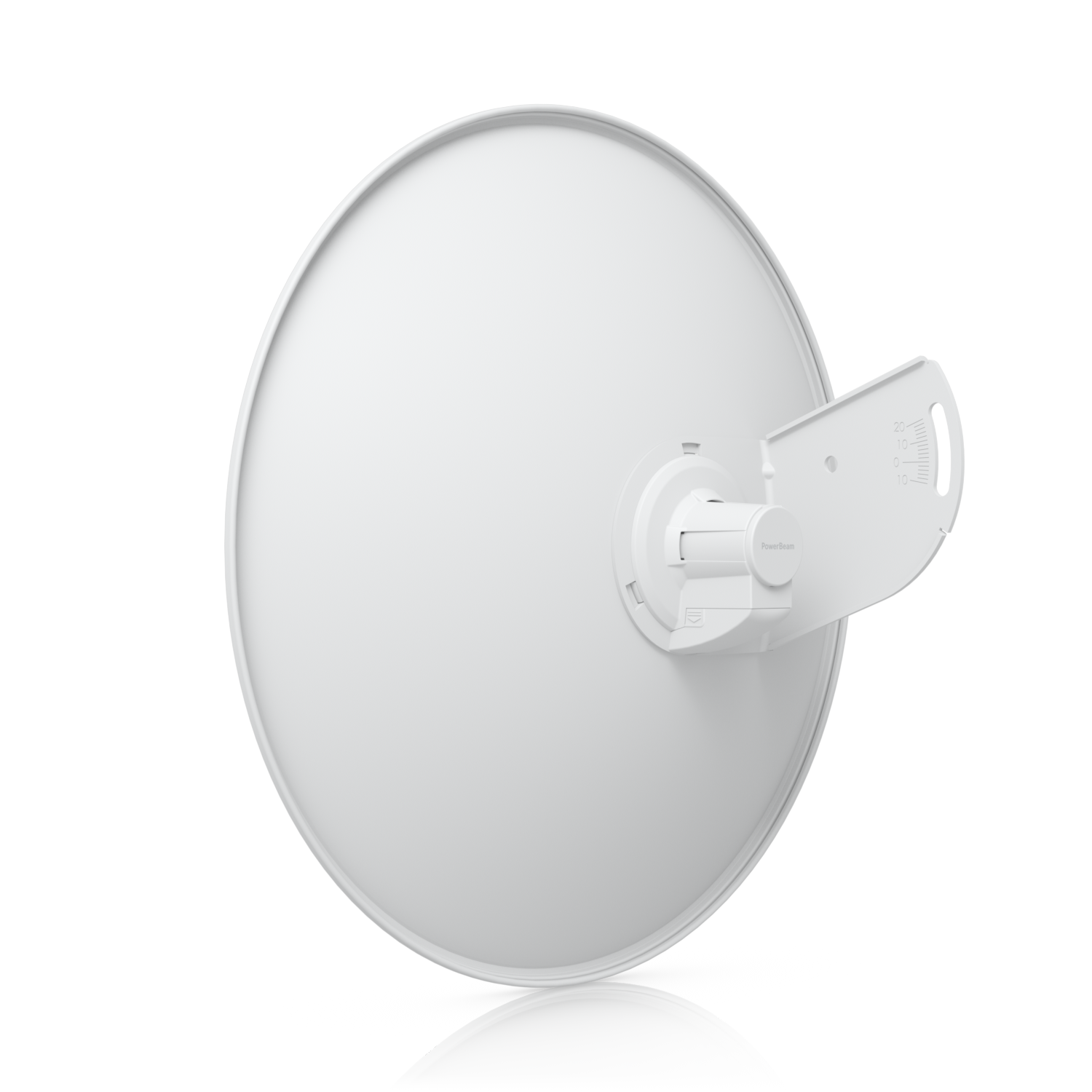
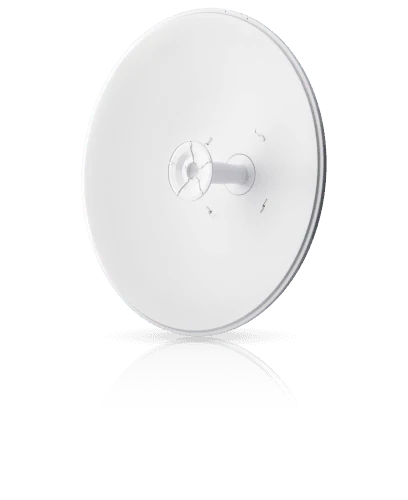
The Ubiquiti PowerBeam M5 400 (PBE-M5-400) is a long-range outdoor wireless bridge built around a large 400mm dish antenna, delivering significantly higher gain than smaller bridge units like the LiteBeam series. It’s designed for point-to-point and point-to-multipoint links over the 5GHz band, and it’s a common choice when a connection needs to travel further or push through more challenging conditions than a compact bridge can reliably handle.
For WISPs, network installers, and businesses in Pakistan needing a serious long-distance 5GHz link — whether for tower-to-client connections, inter-building backhaul, or remote site access — the PBE-M5-400 is one of Ubiquiti’s most established and widely deployed airMAX products. Its larger dish size trades some portability for meaningfully improved range and link stability compared to smaller bridge models.
Large Dish Design for Higher Gain
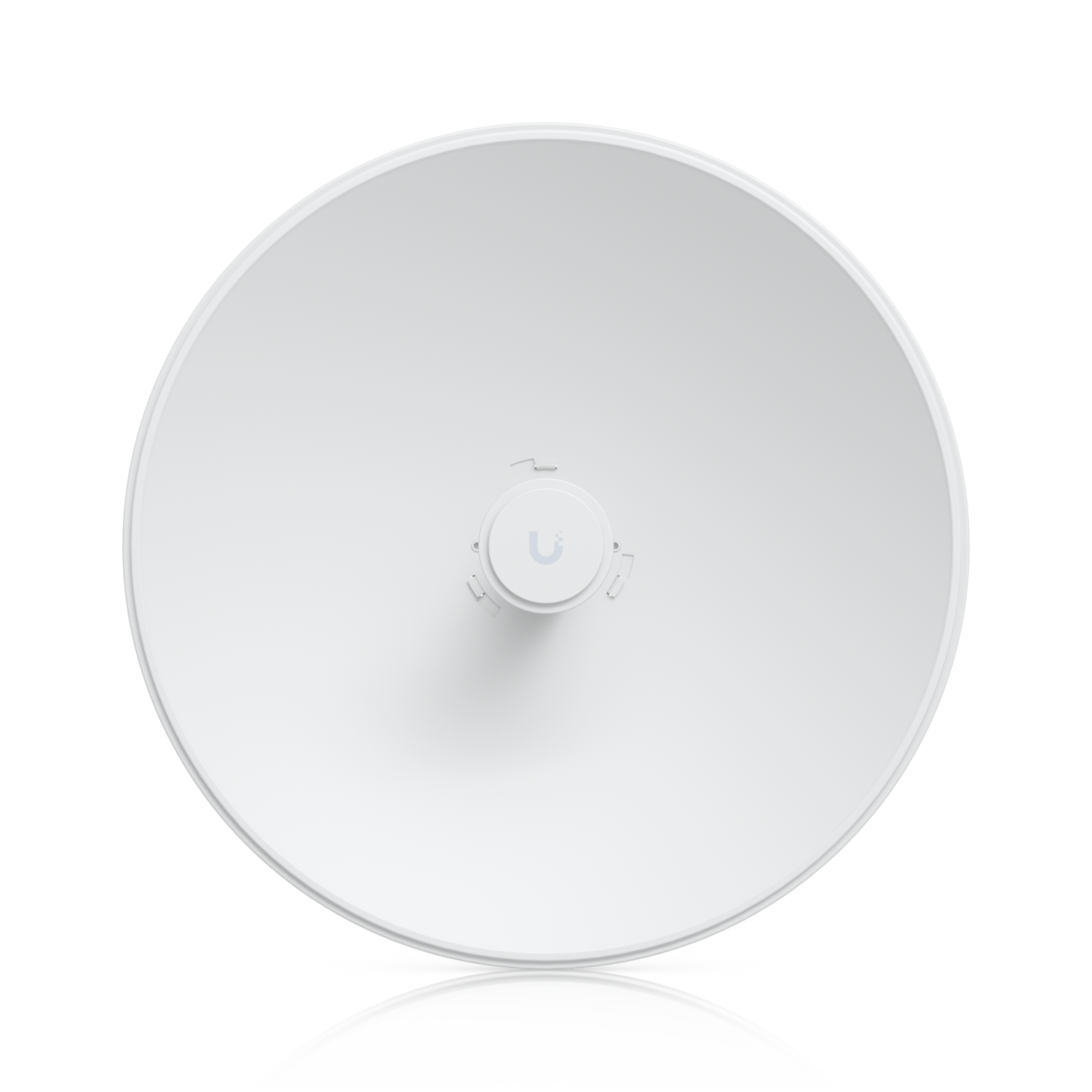
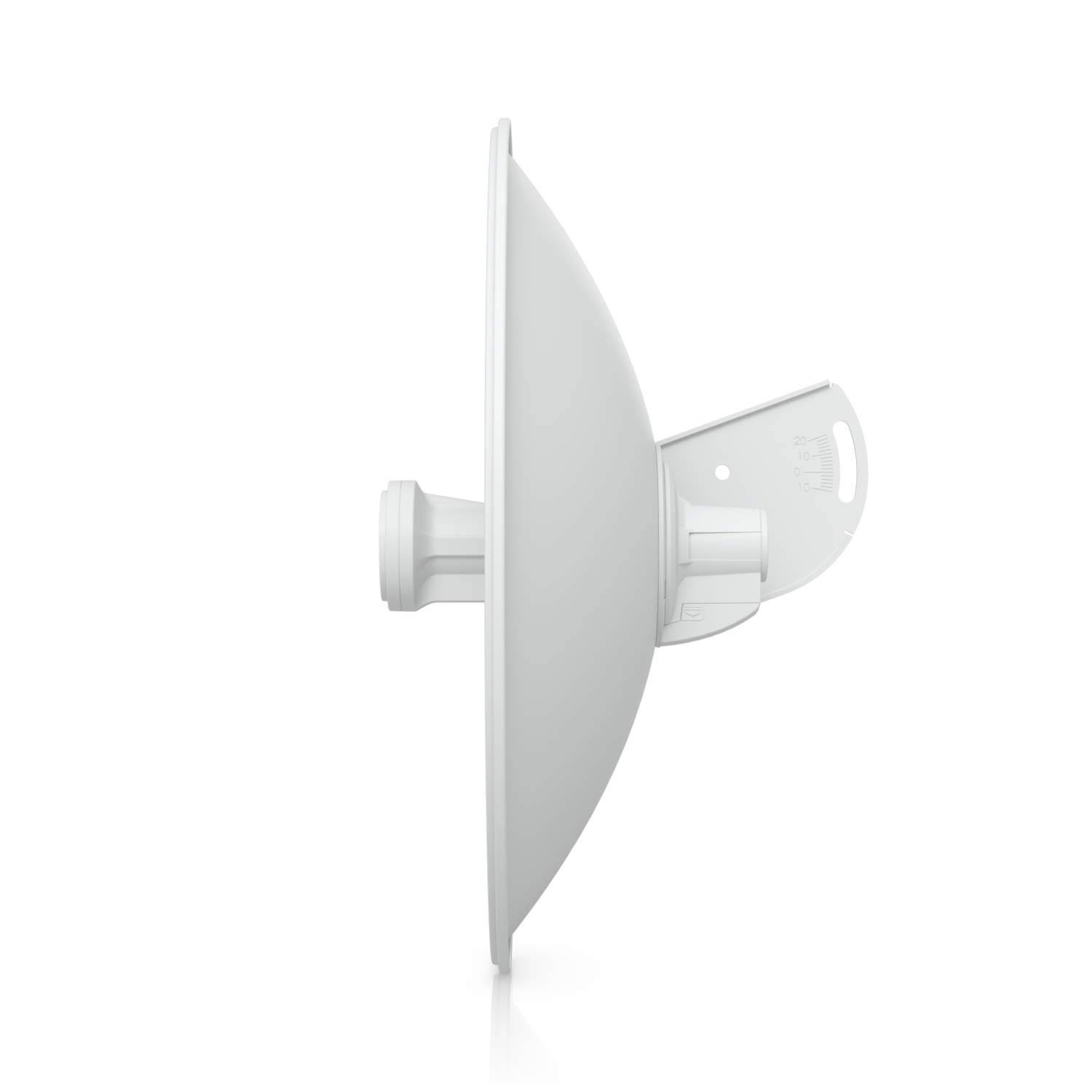
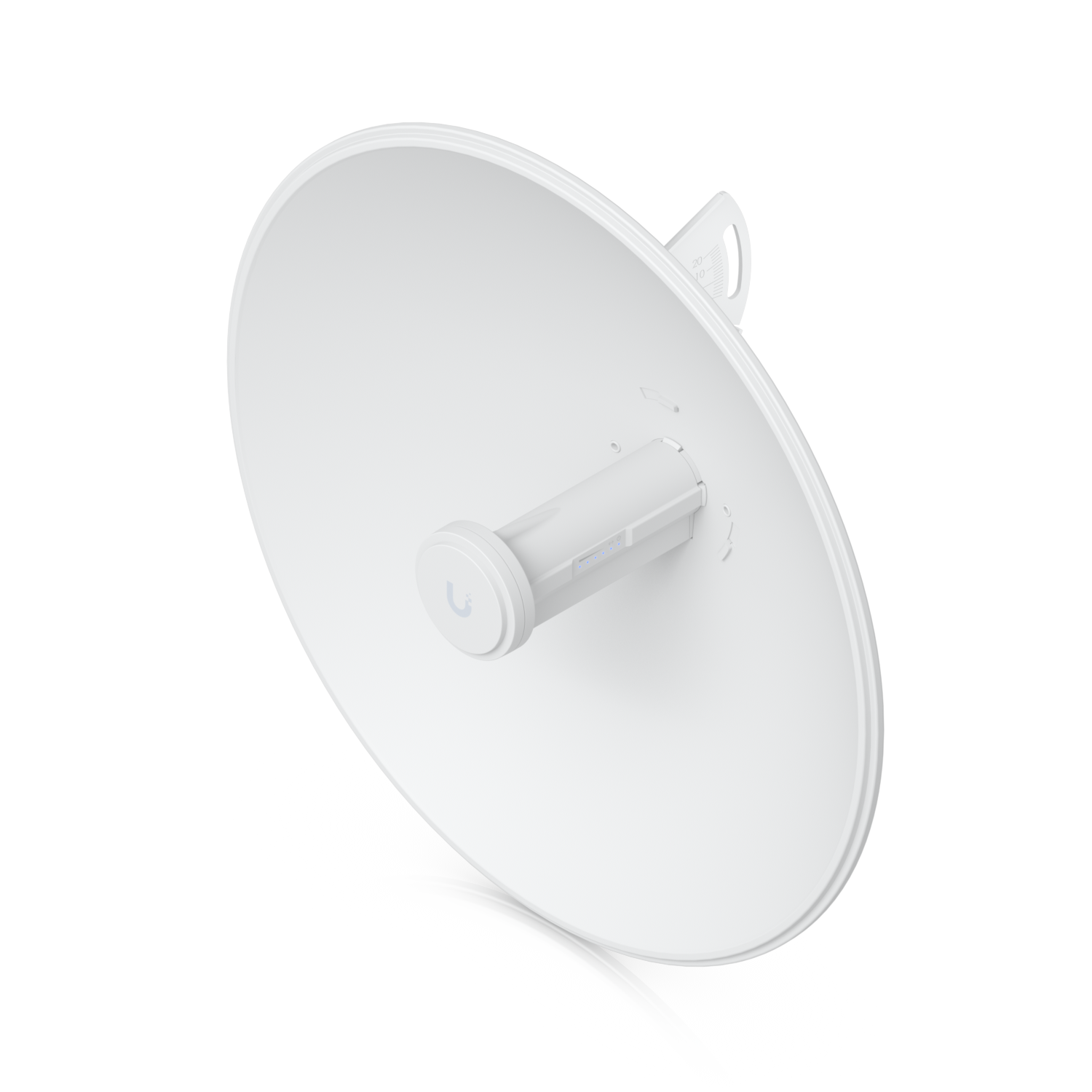
The PowerBeam M5 400 (PBE-M5-400) measures 420 × 420 × 275mm and weighs 1.8kg, noticeably larger than compact bridges like the LiteBeam M5. This size difference isn’t incidental — it directly enables the unit’s 25 dBi antenna gain, roughly 2 dBi higher than the LiteBeam M5’s 23 dBi.
That gain increase might sound small on paper, but in wireless links, even a few dBi can translate into a meaningfully longer usable range or a more reliable connection over an existing distance. The dish shape focuses the signal tightly in one direction, which is exactly what long-distance point-to-point links require.
The enclosure is built from UV-stabilized polycarbonate, chosen specifically to resist degradation from prolonged sun exposure — an important consideration for outdoor equipment that may sit exposed for years in Pakistan’s intense summer conditions.
Built to Handle Real Wind Loads
Because larger dishes catch more wind, Ubiquiti rates the PowerBeam M5 400 (PBE-M5-400) with specific wind loading and survivability figures. It’s rated for wind loading of 342.5 N at 200 km/h (77 lbf at 125 mph), and rated to survive sustained winds up to 200 km/h (125 mph).
This matters more than it might initially seem — a bridge mounted on a rooftop or tower needs to physically withstand storms and high-wind events, not just maintain a wireless signal. Installers working in areas prone to strong seasonal winds should factor this rating into mounting decisions, ensuring the pole or mast itself can also handle the combined load.
Networking and Power Delivery
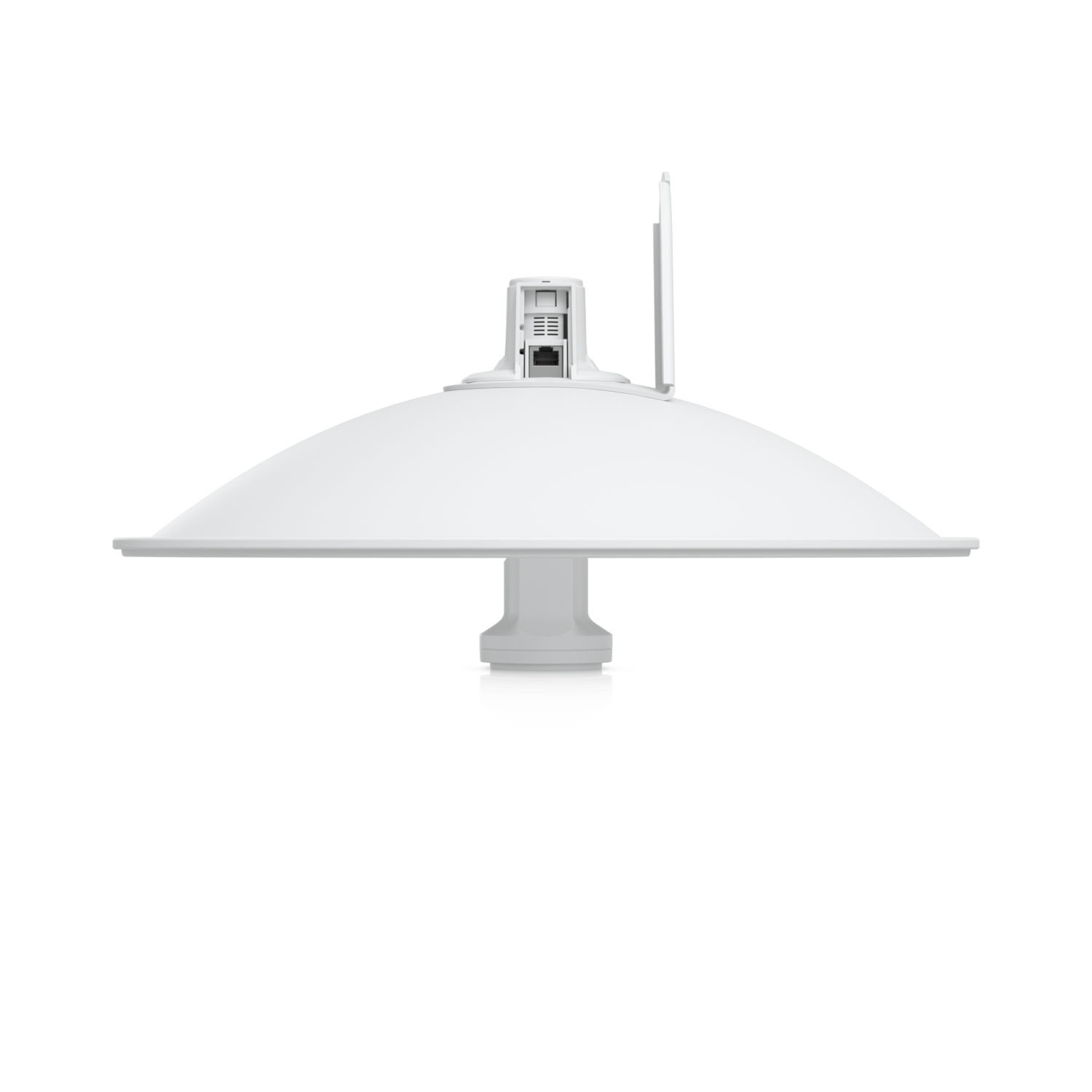
The PowerBeam M5 400 (PBE-M5-400) includes a single Gigabit Ethernet (GbE) RJ45 port, a step up from the 10/100 port found on the LiteBeam M5. This Gigabit interface allows the unit to pass higher-throughput traffic without the wired connection becoming a bottleneck, which is relevant for links carrying more demanding traffic loads, such as aggregated client connections at a WISP tower site.
Power is delivered via Passive PoE using pairs 4/5 and 7/8, with a 24V 0.5A Gigabit PoE adapter included in the box. The supported voltage range is 20–27V DC, and maximum power consumption sits at 8W — modest for a unit of this size and gain.
As with other Ubiquiti airMAX bridges, this PoE-based power delivery means only a single Ethernet cable is needed to both power the unit and carry data, simplifying installation at rooftop, pole, or tower locations where running separate power lines isn’t practical or is significantly more expensive.
Transmit Power and Frequency Range
The PowerBeam M5 400 (PBE-M5-400) delivers a maximum transmit power of 26 dBm, giving it strong output to complement its high-gain antenna. Combined, the higher gain and solid TX power are what allow the PowerBeam M5 400 (PBE-M5-400) to reach further than smaller bridge units under comparable conditions.
It operates across the 5170–5875 MHz frequency range worldwide, with a narrower 5725–5850 MHz band used in the US and Canada. This places it within standard 5GHz outdoor wireless allocations used across Pakistan’s WISP and enterprise networking sectors.
Status Indicators for Easy Diagnostics
The unit includes LED indicators for Signal Strength, Power, LAN, and WAN status. The signal strength LEDs are particularly useful during installation, giving installers a quick visual reference for antenna alignment without needing to constantly check a laptop or mobile device connected to the unit’s configuration interface.
This kind of at-a-glance diagnostic information speeds up alignment during initial setup and makes it easier to spot problems during routine maintenance checks later on.
Built for Harsh Outdoor Conditions
The PowerBeam M5 400 (PBE-M5-400) is rated to operate across an extreme ambient temperature range, from -40°C to 70°C, and tolerates humidity from 5% to 95% non-condensing. This wide environmental tolerance makes it suitable for deployment across Pakistan’s varied climate zones, from scorching summer rooftops to colder conditions in northern regions.
Beyond basic temperature and humidity ratings, Ubiquiti subjects the PowerBeam M5 400 to a series of formal qualification tests, reflecting the demands of long-term outdoor deployment.
Salt Fog and Corrosion Resistance
The unit passes salt fog testing under IEC 68-2-11 (equivalent to ASTM B117), with performance also benchmarked against MIL-STD-810G method 509.5. This test simulates prolonged exposure to salt-laden air, relevant for installations near coastal areas, which is a meaningful consideration for deployments in coastal cities or humid, salt-air-prone regions.
Temperature Shock and UV Resistance
Temperature shock testing under IEC 68-2-14 evaluates how the device handles rapid temperature swings, such as the shift from a cold night to a sun-exposed morning. UV testing under IEC 68-2-5 (at 40°C, equivalent to ETS 300 019-1-4) checks the enclosure’s resistance to sun damage over extended outdoor exposure — directly relevant given the UV-stabilized polycarbonate construction mentioned earlier.
Vibration and Wind-Driven Rain Testing
Vibration testing under IEC 68-2-6 simulates the physical stress a mounted unit experiences from wind, structural vibration, or nearby equipment. Wind-driven rain testing under ETS 300 019-1-4 (equivalent to MIL-STD-810G method 506.5) verifies the enclosure keeps moisture out even during storms with strong horizontal rain, an important protection for any device expected to operate reliably through monsoon-season weather.
Certifications
The PowerBeam M5 400 (PBE-M5-400) carries CE, FCC, IC, and RoHS certifications, along with Anatel approval (01692-15-08356), and is NDAA compliant. These certifications confirm the device meets recognized international standards for wireless emissions, environmental safety, and — in the case of NDAA compliance — relevant for institutional, government, or enterprise deployments with specific procurement compliance requirements.
Installation Considerations
Given its size and higher gain, alignment precision matters even more with the than with smaller bridges. A narrower, more focused beam means small aiming errors can have a larger impact on link quality, so taking time during initial alignment — using the signal strength LEDs or the airOS interface — pays off in long-term link stability.
The included pole mount kit simplifies physical installation, but installers should also confirm the mounting pole or mast itself can handle the wind loading figures mentioned earlier, particularly in regions with strong seasonal winds or storms. Cable quality matters as well; since power and data both travel over the same Ethernet run, using weatherproof, properly rated cable helps prevent moisture ingress or signal degradation over time, especially on longer cable runs up towers or masts.
How It Compares to the LiteBeam M5
Compared to the LiteBeam M5 (LBE-M5-23) covered separately, the PowerBeam M5 400 (PBE-M5-400) offers higher antenna gain (25 dBi vs. 23 dBi), a Gigabit Ethernet port instead of 10/100, and formal environmental qualification testing (salt fog, vibration, UV, wind-driven rain) that the LiteBeam series doesn’t carry to the same degree.
The trade-off is size and weight — the PowerBeam’s larger dish makes it less convenient to handle during installation and more demanding on mounting hardware due to wind loading. For shorter links or budget-conscious deployments, the LiteBeam M5 often remains sufficient. For longer-distance links, harsher environmental conditions, or deployments where maximum reliability justifies the larger footprint, the PowerBeam M5 400 (PBE-M5-400) is the stronger choice.
Common Use Cases
The PowerBeam M5 400’s combination of high gain, Gigabit throughput, and rigorous environmental qualification makes it well suited to demanding long-range deployments. WISPs frequently use it for tower-side or long-distance client links where reach and reliability matter more than compact size, while enterprises use it for building-to-building backhaul across larger campuses or industrial sites.
It’s also a strong choice for challenging environments — coastal installations benefiting from its salt fog resistance, or high-wind regions where its tested wind survivability provides added confidence. Remote monitoring and surveillance backhaul over longer distances than a LiteBeam could reliably cover is another common application, particularly where a single high-gain link needs to replace what might otherwise require a relay setup.
Why Choose the PowerBeam M5 400 (PBE-M5-400)
The Ubiquiti PowerBeam M5 400 (PBE-M5-400) combines a high-gain 25 dBi antenna, Gigabit Ethernet connectivity, and rigorous environmental and durability testing into a purpose-built long-range outdoor bridge. Its larger dish and stronger construction make it a dependable option where link distance, reliability, or harsh environmental conditions push beyond what a compact bridge can comfortably handle.
For WISPs, installers, and enterprises in Pakistan needing a proven, high-gain 5GHz bridge for demanding deployments, the PBE-M5-400 remains one of Ubiquiti’s most trusted options in this category. Full technical specifications for the Ubiquiti PowerBeam M5 400 (PBE-M5-400) are listed below.





Reviews
There are no reviews yet.